
Living in a captive environment can be mentally taxing for intelligent avian species. In the wild, parrots spend approximately four to six hours every single day foraging for food, which involves searching, manipulating objects, and solving complex problems. When these natural drives are suppressed in a cage with a stationary food bowl, birds often develop destructive habits. Providing enriching toys for bored pet birds is not just a luxury; it is a fundamental requirement for their psychological and physical well-being.
- Foraging toys provide the highest mental stimulation value (5/5).
- Weekly rotation is essential to maintain novelty and interest.
- Safe materials like balsa, palm, and vine are preferred for shredding.
- Monitoring for feather-destructive behavior is crucial for prevention.
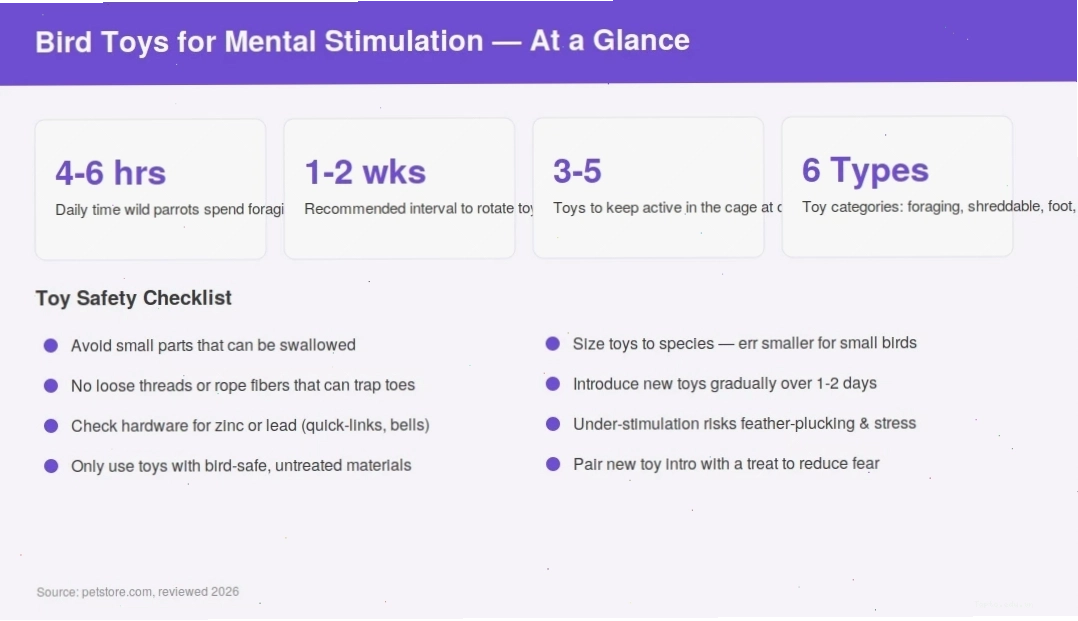
Understanding the necessity of mental stimulation for birds
Research consistently indicates that under-stimulation in captive parrots leads to stereotypic behaviors. These are repetitive, functionless movements that signify deep psychological distress. Much like how cat care involves monitoring for physical ailments, bird owners must watch for signs of boredom that manifest as excessive screaming or feather plucking. An avian species guide often highlights that a bird without enrichment is a bird in trouble.
Establishing a routine that mimics wild behavior is the best approach. While domestic cats might require protection from ear mites or tick-borne diseases to maintain overall cat health, birds require a complex environment to manage their cortisol levels. When we explore egret species in the wild, we notice their constant movement and environmental interaction—a trait all birds share, regardless of size.
Primary categories of stimulating bird accessories
Not all toys serve the same purpose. To provide a balanced mental diet, owners should offer a mix of different functional categories. Below is a detailed breakdown of how different stimulating bird accessories impact a bird's daily life.
| Toy Category | Best Usage | Benefit for the Bird | Replacement Signal |
|---|---|---|---|
| Foraging Puzzles | Hiding pellets or treats inside | Encourages problem-solving and natural search | When mechanism breaks or residue builds up |
| Shreddable Toys | Paper, palm, or balsa materials | Channels the instinct to chew and destroy | When pieces become soiled or too small |
| Movement Toys | Swings, ladders, and mats | Enhances balance and physical activity | When hardware loosens or wood splinters |
| Foot Toys | Small objects for manipulation | Supports beak-foot coordination | When pieces crack or become swallow hazards |
The vital role of parrot foraging toys
Parrot foraging toys are considered the gold standard of enrichment. These devices require the bird to work for its meal, turning a 30-second feeding into a 30-minute mental workout. This prevents the 'learned helplessness' that often occurs when food is too easily accessible. If you are following bird watching tips, you will notice that wild parrots never find food without effort.
Destructive instincts and bird shredding toys
Bird shredding toys made of bird-safe materials like vine or soft wood allow birds to wear down their beaks naturally. This behavior is essential for cockatoos and macaws who have a high drive to dismantle their surroundings. Providing a safe outlet for this destruction prevents them from targeting furniture or their own feathers.
Strategies for effective toy rotation and safety
Simply filling a cage with toys is not enough. Overcrowding can lead to fear, especially in a cautious bird. Instead, implement a smart rotation system. By changing the selection weekly, you maintain a sense of novelty that keeps the bird engaged without overwhelming its living space.
- Observe and match: Align toy choices with the bird's natural tendency (e.g., heavy chewers vs. climbers).
- Gradual introduction: Teach foraging slowly to prevent frustration and ensure the bird understands how to retrieve the reward.
- Safety inspections: Regularly check for frayed ropes, sharp metal hardware, or toxic dyes.
- Size matters: Ensure the toy is appropriately sized for the bird's beak and feet to avoid entrapment.
Proper egret identification in the field often requires looking at environmental interactions; similarly, observing your pet bird's toy preference helps in creating a better enrichment plan. For those seeking a deeper avian species guide, understanding these behavioral nuances is key to longevity.
Establishing a long term enrichment system
The most effective enrichment is a system rather than a single item. Combine explore egret species knowledge with practical home care to ensure your bird remains sharp. If a bird suddenly loses interest in all activities, it may indicate a health issue rather than just boredom, much like how a sudden change in domestic cats might signal an underlying condition. Mental health is intrinsically linked to physical health; a stimulated bird is a healthy bird. Always prioritize bird-safe materials and observe your pet's interactions to ensure they are challenged but not stressed. By investing in diverse stimulating bird accessories and following a structured rotation, you can ensure your avian companion thrives in your care for years to come.